4 / 12
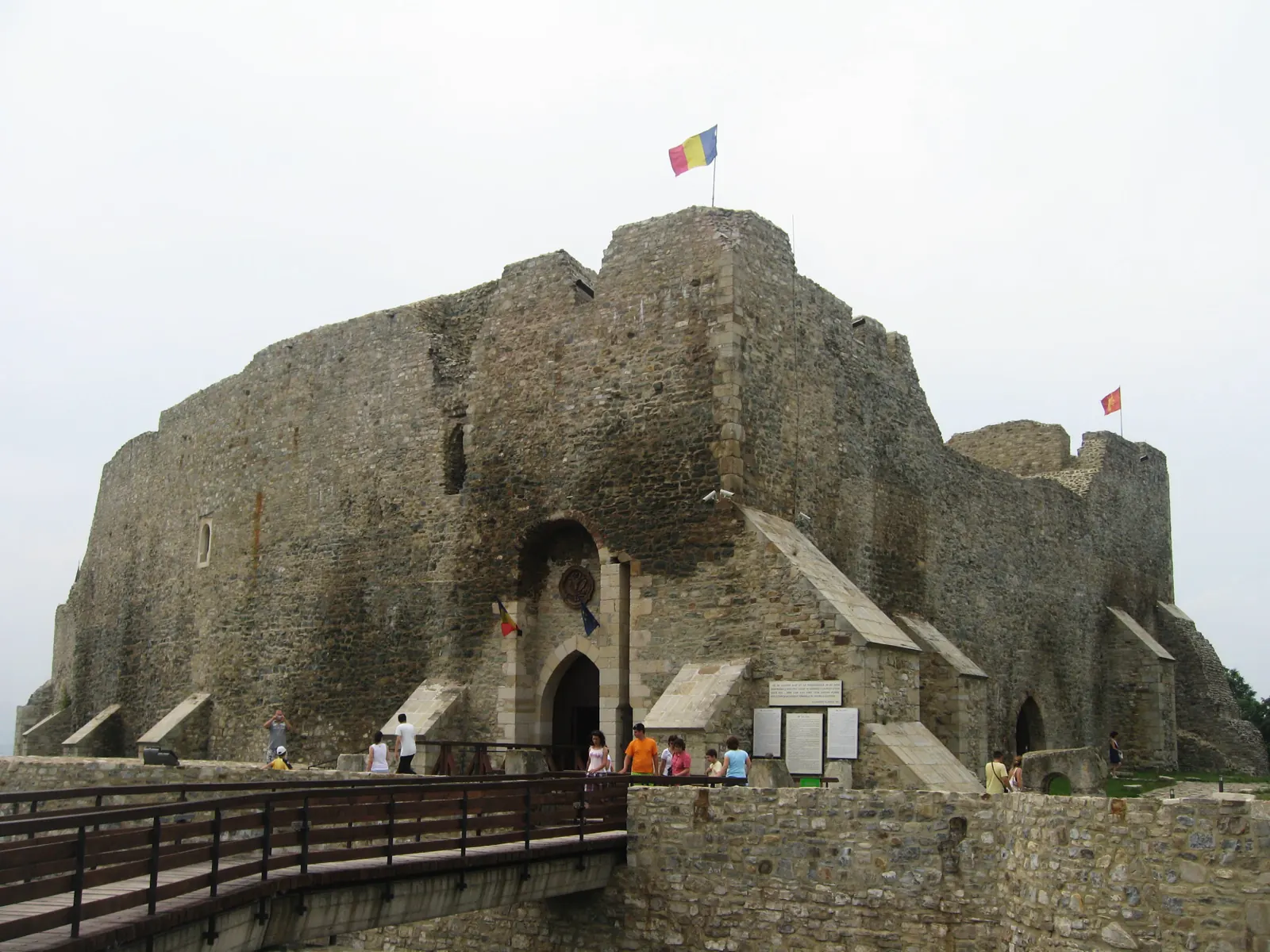
Stop 4Room 1: The north-west tower
Room 1 – Origins and the siege of 1395
We are in the north-west tower, where the citadel's story begins. For a long time it was believed that the fortress had been built by the Teutonic Knights or by Saxons, because of its name, which sounds like the Romanian word for German.
- Period
- a doua parte a domniei lui Petru I Mușat (1375–1391); prima atestare 2 februarie 1395
- Where it is
- Room 1: The north-west tower, the fort
Read the textHide the text
Narration text
We are in the north-west tower, where the citadel's story begins. For a long time it was believed that the fortress had been built by the Teutonic Knights or by Saxons, because of its name, which sounds like the Romanian word for German. Archaeology proved otherwise: the finds from the oldest layer resemble those at Suceava, dated by coins from the reign of Peter I Mușat.
The citadel was therefore built by the princes of Moldavia, in the second part of Peter I's reign, between 1375 and 1391. The name most likely comes from the Neamț river flowing at the foot of the mountain. Its baptism of fire came soon.
In the winter of 1395, King Sigismund of Luxembourg of Hungary invaded Moldavia. On 2 February 1395 he issued a charter "ante castrum nempch", before Neamț Castle, the first certain written mention of the monument. The Moldavian chronicle says Prince Stephen I defeated Sigismund at Hindău, today Ghindăoani, about 12 kilometres from here.
The citadel had held.